

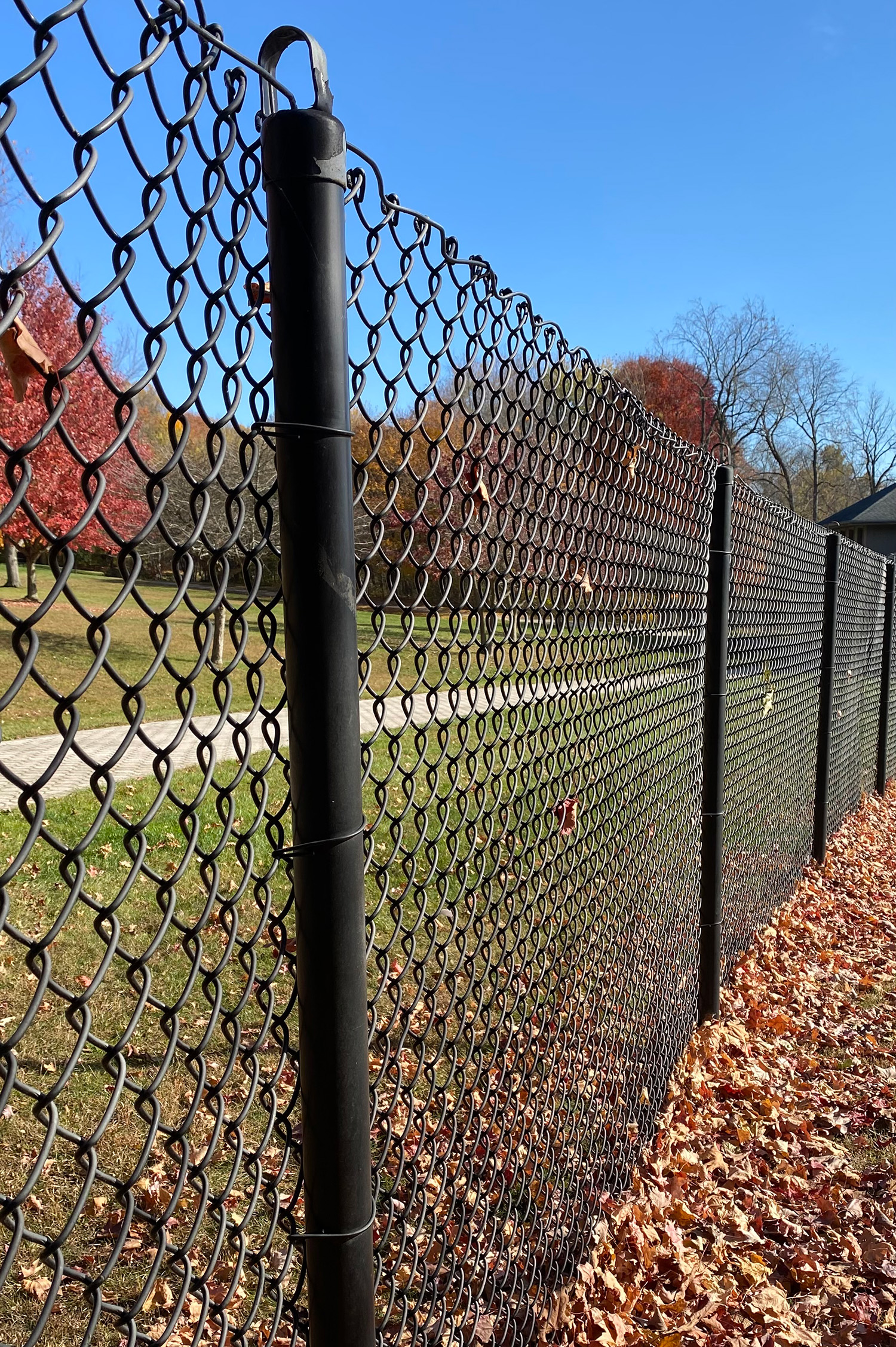
If you've ever watched your dog make a break for it through a gap in the fence, you know that moment of panic. Keeping our pets and animals safe isn't just about having a fence, it's about having the right fence. Chain link fencing has been the go-to choice for dog owners, farmers, and animal lovers for decades, and for good reason.
Whether you're containing an energetic puppy, protecting a chicken coop from predators, or keeping goats from wandering into your neighbor's yard, chain link offers the perfect balance of visibility, durability, and affordability. Let's look at why it works so well and how to make sure your fence does exactly what you need it to do.
Why Chain Link Fencing Works for Dogs and Animals
You can always see your animals. Unlike solid wood or vinyl fencing, chain link lets you keep an eye on your pets and livestock at all times. This visibility works both ways: your dog can see you, which often reduces anxiety and fence-line stress. You get peace of mind knowing exactly what's happening in your yard or pasture.
It stands up to animal behavior. Dogs dig, goats ram, chickens scratch. Chain link is built to handle it. The galvanized steel mesh won't splinter like wood, crack like vinyl, or warp in the weather. When properly installed, it flexes slightly under pressure but springs back without permanent damage.
It covers large areas without breaking the bank. If you need to fence a big backyard or several acres for livestock, chain link gives you the most coverage for your investment. The materials are affordable and the fence lasts for years with minimal maintenance.
Weather won't take it down. Rain, snow, heat, and humidity don't phase galvanized chain link. There's no painting, staining, or treating required. A quick inspection once or twice a year is usually all the maintenance you'll need.
It keeps predators out. When installed correctly with the right mesh size and buried perimeter, chain link provides excellent protection for chickens, rabbits, and other small animals. Raccoons, foxes, and other predators can't easily breach a properly secured chain link enclosure.
Solving Common Dog and Animal Fencing Challenges
Even the best fence won't work if it's not set up to handle the specific challenges your animals present. Here's how to address the most common issues.
Stopping Dogs from Digging Under the Fence
Some dogs are natural diggers, and a gap under the fence line is an open invitation to escape. The solution is to bury your chain link fence 6 to 12 inches below ground level. For persistent diggers, add a bottom tension wire along the base of the fence or pour a shallow concrete footer. This creates a barrier that stops digging attempts before they become escape routes.
Preventing Escapes Over or Through the Fence
Athletic dogs can clear a 4-foot fence without much effort, and small puppies can squeeze through standard 2-inch mesh openings. For most dogs, a 5 to 6-foot fence height works well. Larger or more athletic breeds may need the full 6 feet. If you have small breed puppies, consider adding Puppy Post Kits to the bottom section of your fence. These kits include posts and tighter mesh spacing designed specifically to prevent tiny dogs from slipping through.
Protecting Small Animals from Predators
Chickens, rabbits, and other small animals need protection from predators that hunt at night. Standard 2-inch mesh isn't always enough to keep out determined raccoons or weasels. Opt for a smaller mesh size, around 1 inch, and make sure to bury the bottom of the fence at least 12 inches deep. Predators often try to dig under rather than climb over. For chicken runs, consider adding chain link overhead as well to protect from hawks and climbing predators.
Containing Large Animals That Push and Test Fences
Goats, pigs, and sheep can put serious pressure on fencing, especially if they're testing boundaries or trying to reach something on the other side. The key is using heavier gauge wire. While 11-gauge works for most residential dog fencing, you'll want 9-gauge or even 6-gauge for larger livestock. Make sure your corner posts and gate posts are extra sturdy and properly braced. These are the weak points that animals will find and exploit if they're not reinforced.
Quick Guide: Choosing the Right Chain Link Fence
Not sure what specifications you need? Here's a quick reference based on what you're containing:
Height Recommendations
- Small dogs (under 25 lbs): 4 feet minimum
- Medium dogs (25-50 lbs): 5 feet recommended
- Large or athletic dogs (50+ lbs): 6 feet
- Chickens and small livestock: 4 to 5 feet
- Goats, pigs, sheep: 4 to 6 feet depending on size and breed
Mesh Size and Gauge
- Standard 2-inch mesh, 11-gauge: Works for most dogs and general animal containment
- Puppy Saver (smaller bottom mesh): Essential for small breed puppies
- 1-inch mesh: Best for chickens and predator protection
- 9-gauge or heavier: Necessary for goats, pigs, and larger livestock
Don't Forget These Essentials
- Bottom tension wire: Prevents lifting and keeps the fence tight to the ground
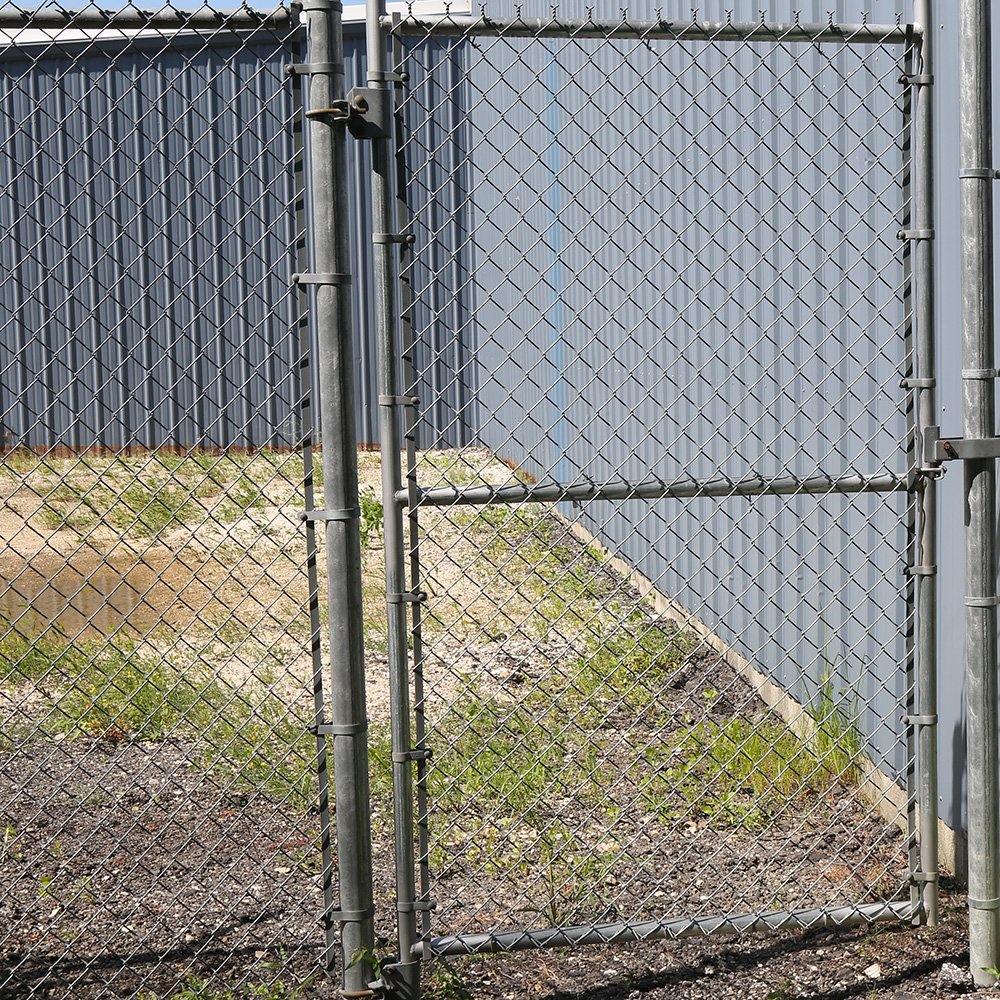
- Self-closing gate hardware: Ensures gates latch securely every time
- Privacy slats (optional): Reduces fence-line barking for dogs who get excited by passing traffic
Setting Up Your Fence for Success
Installation makes all the difference between a fence that works and one that becomes a constant source of frustration. When setting posts, make sure corner and gate posts are sunk deeper and set in concrete. These anchor points bear the most stress. Bury your fence line where digging is a concern, and keep the mesh tensioned properly so there's no slack for animals to push through.
Check your fence a couple times a year for any areas where the mesh has loosened or posts have shifted. Catching small issues early prevents bigger problems down the road.
Once you've determined the right height, gauge, and mesh size for your animals, browse our selection of chain link fence materials to get everything you need. Not sure what to order? Our team is happy to help you calculate materials based on your specific setup.
Shop Chain Link Fence MaterialsIf you would like more information about chain link fencing, please visit our Resources Hub for informational and instructional content or reach out to our sales representatives. They are happy to help in any way they can!
Contact Us